Friday, April 28, 2006

dark moon Drone, Crediton

Brian - keyboard
Henry - percussion and vocal percussion
Richard - electric bass guitar
John - acoustic guitar, bouzouki, mandola, percusion, vocals
me - saz, balalaika, percussion

view from Rainbow window
view from Rainbow Studio window - John's car (he's now a qualified driving instructor) and the "peace pole" visible

A hugely enjoyable session at The Rainbow last night! Despite the supposedly unfavourable lunar phase, this was an energetic, creative one with more diversity than usual. Richard arrived a bit late, but was soon plugged in and playing his bass. The last piece is based around a West African salsa-type bassline he's been working on lately.

Unfortunately the record levels weren't quite right (again). I've had so much trouble with this since I switched to a new MiniDisc recorder that I decided to leave it on 'auto levels' and hope for the best. This has worked before, but we got a lot louder than usual, and rather than the 'clipping' which can result from manually setting levels too high, the result is a kind of sporadic compression of the dynamic range when Henry's drums kick in at their loudest. It's not quite as bad as the distortion that results from 'clipping', but it definitely mars the recordings. Oh, well. Next time I'll be more careful.

There's also a bit of my balalaika playing that's slightly out of tune. I've always had trouble amplifying it, ended up cranking it right up and putting it through an over-the-top flanger effect, which creates the effect of a balalaika being played down an old-school phone line from Vladivostock. It's hard to keep that thing in tune though (cheap Russian factory model).

Listen Here

Thursday, April 27, 2006

Turkish connections

A few weeks ago I discovered via a "Google Alert" that Children of the Drone had received a brief write-up in a Turkish language blog called Modern Rok Hamlesi.

Modern Rok Hamesi

It had occured to me to take a printout down to the nearby "Dinosaur Cafe", a super-friendly local establishment run by a family of Turkish Kurds. James T offered to do this as he stops by their regularly. He just sent us this email:

"Had a great 10 minutes with Turkish proprieter of the Dinosaur Cafe translating the bit about COTD on Turkish website: (http://modernrok.blogspot.com)

Very roughly it goes:

3 English artists with the help of 20 others have set up a musical
collective. Various national (ethnic) instruments: sitar, mandola, saz.
They translate from different (musical) languages in a non-hierarchical
way (i.e. unstructured, but also could mean "democratic", i.e. with no one
influence prodominating). Their music is priceless (another double
meaning: (1) so good it's beyond price, and (2) it is available free!).
Visit their website. [And there is a link to us provided]
"

So it's a relief to discover that it wasn't a scathing critique of my very un-Turkish style of saz playing!

Wednesday, April 26, 2006

"The Lonesome Touch"

A few years ago my friend Mike Collard played me a recording of some exceedingly lovely Irish fiddle music as we driving through the mountains of West Cork. It was The Lonesome Touch by Martin Hayes and Dennis Cahill, and, from amongst the vast amount of clutter in the front of his car, he managed to produce the CD booklet, urging me to read Hayes' sleeve notes. I was deeply moved.

Martin Hayes with Dennis Cahill

Recently Keith Drone lent me a copy of the same album, so now I can transcribe that bit of writing:

"The Lonesome Touch" is a phrase I have heard in my native County Clare all my life. It is used to describe a person's music. It represents a quality that is difficult to express verbally. It is the intangible aspect of music that is both elusive and essential. The word lonesome expresses a sadness, a blue note, a sour note. Even though the music bares the trace of struggle and of pain, it is also the means of uplift, transcendence to joy and celebration. Meeting and experiencing sadness or tragedy in art, literature or music is very often the transformation of that experience to its corresponding opposite, the release of joy and freedom.

The lonesome touch is something that is difficult to achieve. Most of the time for me it is only an aspiration. To achieve that quality requires a lot of integrity and purity, which is personally demanding. One is forced to put the requirements of the music before all personal considerations, to play honestly from the heart with no motive other than the selfless expression of joy and beauty for their own sake.

I was very fortunate during my youth to have had access to and experience of this musical quality. Many of the old musicians had this special
draiocht. Some of them weren't technical virtuosos, but through the honesty of their expression they could touch your heart. It is this quality that has driven me and inspired me all of my musical life. I have found that you can never possess it, you can only yield to it. It demands honesty and humility. Only on rare occasions have I really been able to express completely from this point. For the most part it still remains the unobtainable horizon, the object of inspiration and motivation.

In Irish music today there is much debate and division on the issues of continuity versus change, and tradition versus innovation. I think it is a mistake to divide these issues, as the music is capable of containing all of these parts at once. The real battle is between artistic integrity and the forces that impede creative expression. Traditional Irish music has always experienced change and been enriched by innovation, while at the same time maintaining continuity. The issue that is of utmost importance is that innovation, change, tradition and continuity all be tempered by integrity, humility and understanding. These issues are the issues of all artistic pursuit and are therefore universal, as is the very core of the music itself. Irish music is the expression of the universal muse. What gives it its unique character is that this muse has been expressed through our unique cultural milieu and ethos. It represents the experience and aspirations of a collective of musicians spread through time. The music is more than just one point of view. It is many things. It is dance music, it is music of community and sharing. It is music to listen to, music to remember by, and to express through. At any one time it contains all of these attributes, but in varying degrees.
"

(Martin Hayes, 1997)

This is particularly relevant as I may be going to Ireland in a couple of weeks, and this trip should involve at least part of the Baltimore Fiddle Fair (also down in West Cork). Inge is coming up from France for some workshops and classes there, having been working on her fiddle playing quite a bit in recent years. Also, our friend Liz will be celebrating her 50th birthday with friends in Baltimore the same weekend. If I am able to go (this is still to be decided), I imagine I'll come back with a few interesting recordings...

Monday, April 24, 2006

A Tiny Window - Miscellany One

I've just put together and uploaded to the Internet Archive Open Source Audio archive a new collection of otherwise unclassifiable archive recordings: Miscellany One.

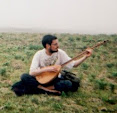
me, at The Grey Mare and Her Colts (long barrow), Dorset
me, at The Grey Mare and Her Colts (long barrow), Dorset - August 2005

As usual, all my solo stuff, and anything that wasn't done with Children of the Drone, Ail Fionn or the Dongas Tribe, is attributed to the umbrella name "A Tiny Window".

I've just created an ultra-basic ATW webpage (to be later expanded), and will soon compile an albums-worth of the best material for distribution via Last FM, probably to be titled A Quick Look Through A Tiny Window.

Miscellany One, on the other hand, is a real mixed bag: solo saz and balalaika sketches, me accompanying Vicky playing a folk tune on her recorder, some extended psychedelic electric jamming with Pok Spacegoat (backed up by Henry and Richard Drone), a couple of daft electronic experiments, a D'n'B remix of some percussive saz playing, Matt Spacegoat's remix of my voice talking about retrocausality, etc.

Listen Here

Soothsayers

I'm still feeling extremely grateful for having been able to witness The Soothsayers at The Phoenix on Friday, supported by 3 Daft Monkeys (people I knew from travelling in West Cornwall). The Monkeys are great fun, but The Soothsayers were a total musical epiphany for me. I'm forever indebted to Stevie P (he and Jonno used to play in a band with Robin the trumpeter in London in the 80's) for bringing them to my attention. They play a kind of Fela Kuti-style Afrobeat, but more dubbed out and psychedelic, more multi-dimensional (I put some Fela on the next morning and was disappointed by how 'thin' it sounded in comparison).

The SoothsayersZoe Rahman
some Soothsayers and keyboardist Zoe Rahman

There's a two-piece, razor-sharp horn section and an electric guitarist who mostly held down an ultra-tight groove, but, when given the chance to shine, played like a sort of no-wave Ernest Ranglin (adding an angular, spooky African Headcharge "future dub"-type sound). Reggae producer Nick Mannaseh was doing an excellent job dubbing everything from the sounddesk, effectively a member of the band for this peformance. Particularly amazing was keyboardist Zoe Rahman (I think she's the saxophonist's sister, an award-winning jazz pianist who was guesting with them on this occasion). NO dodgy keyboard sounds! All my favourite keyboard sounds, in fact - she kept painting these beautiful psychedelic textures all over the sound (could have been slightly louder in the mix, I felt). She did a melodica solo reminiscent of "Any Colour You Like", and when the band did give her space to tear it up on the keyboard (a Roland RD-700) she just turned my head inside out. I haven't experienced anything like it since Omar Sosa played here.

The overall sound seemed to meld elements of all my favourite music from the early-mid 70's into one seamless whole - African groove was the main ingredient, but with echoes of electric-period Miles Davis, all the best Jamaican dub, early 70's "Dark Star", the mellowest 70's Floyd...music you can swim around in.

The bass player, if you squinted, even looked like a young Haile Selassie (from where I was, anyway). He and the percussionist/singer Adesose Wallace were smiling beatifically throughout most of the set, and Zoe kept breaking into her own ecstatic smile (almost as if she kept realising how amazing she/they were) which had become almost permanent by the end of the set.

Go and see this band!!

Note: I just found out from Paul Giblin of Future Sound of Exeter that they lost £700 on this one, which is a real shame (there was a respectable crowd, but that might have been because no one was taking tickets on the door). FSOE deserve major respect for making this (and so many other wonderful events) happen. I only recently discovered that they operate as a non-profit organisation. It was actually Paul who originally puy me in touch with Philip Robinson when I first moved to Exeter, leading to the creation of Children of the Drone.

Friday, April 21, 2006

COTD 5th birthday celebration

It's about five years since Simon, Keith and I first played together as "Children of the Drone". Last night we had a fifth birthday celebration - Vicky made an amazing lemon cake (topped with crystallised wildflowers!) which was distributed with tea during the half-time break of a very enjoyable session:

cake made by Vicky
Vicky's amazing cake

Keith - acoustic bass guitar, mandola, keyboard
Simon - laptop, electronics
James T - keyboard, poetry, percussion
John - acoustic guitar, low whistle, mandola, bouzouki, vocals, percussion
Henry - percussion, vocals
me - saz, acoustic bass guitar, percussion, accordion drone

During the break we were listening to a random COTD playlist, and when we were almost ready to start the second half, James started reading one of his "found poems" over the top of some old, pre-recorded Dronings. I gradually faded this down on the stereo before joining in. We've talked in the past about using randomly selected loops of archival COTD recordings as a springboard for performance (since playing live can be quite problematic with an ensemble such as this).

Simon, having discovered that wireless Internet was available in Oblique House (presumably leaking through from a neighbouring house), made use of this to stream bits of audio he found on the IAA and elsewhere. What at first sounds like a US telephone error message (a prerecorded woman's voice saying "The number you have dialed is incorrect...") turned out to be something from a "numbers station" site - a recording of a phone-based cryptography key disguised as an inocuous bit of telecom infrastructure. He ended one piece with a strange noise from a field recording made in a tipi in the Haldon Hills (near Exeter) by the wonderfully-named local sound-artist Bad Sector.

Listen Here

Thursday, April 20, 2006

Sufiboy and the Doktor on Audiobulb Underground release

This arrived yesterday from Simon Drone (a.k.a. Sufiboy):

"Hi Matthew,

I recieved this today from Audiobulb, a label I sent urls to as a demo:

"Hi Simon

Thank you for your demo and your interest in audiobulb.

I thought your music sounded very good & I respect your skills. You have
some original ideas and the production was of a high standard - i liked the
egg slicer action!

I'd like to feature the track Egg Slicer and Sandwich Ingredient Recital in
an Audiobulb Underground release.... these are hidden html pages within the
audiobulb site. If you visit our front page and look for a flashing gif
image - the size of a full stop you will find one.....

All I need is the mp3 + any pictures - jpegs that you have of the live
event......

Best wishes,

David @ Audiobulb Records"

I have said yes, hope you don't mind, see you thursday,

Simon
"


Simon (left) playing a sausage using his Plant-Chant device, at a Blender happening a couple of days prior to the Holmbush Festival in Ide. The egg slicer is also visible in front of his right knee.

The track in question was recorded out at a little festival in someone's garden in Ide last summer. Simon was playing the egg slicer and I was reciting the rather alarming list of ingredients from a Co-op Classic Cheese and Onion sandwich he had just eaten - a very rare recording of me providing "vocals"! You can read more about this here - the audio is available here.

In a similar vein, I just discovered this - Mark E. Smith of The Fall reading the football scores on a BBC TV sports programme last year!

Sunday, April 16, 2006

Trip to Kent

I just got back from a week in the Southeast with Vicky. We were mostly visiting friends and exploring churches, hillforts, sacred landscapes, etc., but I did take my saz along and played a bit most days. None of my friends down that end of the country are musicians, so I didn't get a chance to jam or record anything, but there were some musical occurences worth reporting:
  • My Buddhist poet friend Tim showed us a couple of excerpts from a Television Personalities DVD, including the video to the wonderful "The Painted Word", the title track from an album I really should track down. I'd forgotten how good they were at their best. He also showed me the most unexpected article imagineable from The Sun (a British right-wing, ultra-superficial tabloid newspaper, for non-UK readers) - a substantial interview with the TVP's mainman Dan Treacy and extremely favourable review of their new album My Dark Places. The Sun have somehow managed to rank the TVPs up in their "five bands most likely to make it big in 2006"!!!

  • Dave, an old friend who lives in a caravan in the woods on the edge of Canterbury, produced a bag of about thirty tapes I stored in a cardboard box underneath his old caravan about ten years ago. The caravan in question burned down a couple of years ago, but somehow the box had survived, and although a lot of the inlay cards are damp and decaying, the actual magnetic tape seems to have survived surprisingly well - a real treasure trove of stuff I liked fifteen years ago and which I still rate: Sonic Youth, Syd Barrett, Fairport Convention, Nick Drake, Eno, Robert Wyatt, Gong, Cocteau Twins, Grateful Dead, Richard Thompson, Cardiacs, The Chameleons, and even some Sarah Records stuff (three tapes of Field Mice singles, B-sides and obscurities). Best of all is an extraordinary 1950's field recording from The Congo (I believe) called "Pygmies of the Ituri Rainforest" - among the most truly organic human music that is to be found anywhere. Last night, when we got home, I DJ'd my way through some of the highlights of this collection. The box also contained a "lost" tape of 1994-95 recordings from Ghent when I was first playing improvised music with Inge and friends. I'll be processing that up soon to add to my archive collection hosted by the IAA.


  • Luke Smith   Dan Treacy
    Luke Smith and the TVP's Dan Treacy

    On Thursday evening we took Dave down to a new venue in Canterbury called The Orange Street Music Club to meet up with Tim and Simone, another old Whitstable friend, and see a unique performer called Luke Smith. Luke has a weekly residency at the OSMC, described in their literature as the city's "quintessentially English anti-folk anti-hero". Tim had described his sound as involving elements of Robert Wyatt, Television Personalities, Madness, Chas 'n' Dave and English music hall. That's quite a good description, but you really have to see and hear him to get the picture. He's an excellent pianist (also plays some electric guitar), writes and sings extremely honest, sincere, warm, funny, quirky lyrics about cosyness, cups of tea, heartbreak, persistence in the face of adversity, England and the minutiae of life. A teapot sat, appropriately, atop his piano. There was much cheerful banter with Adrian the bassist and Dave the Drummer (who turns out to be Luke's dad), and two sets with a guest slot in between. The OSMC is the old Oddfellows Hall. It has pretty good acoustics, a few sofas and friendly barstaff - it's heartening to go back to the Canterbury - a city whose musical past and particularly quirky vibe I have a deep fondness for - and find something like this going on there.

Hawkwind!

I went to see Hawkwind at The Phoenix the Friday before last, and I'm not embarrased to say that they were superb! Dave Brock's been keeping this thing together for 37 years, and it's heartening to see how much he seems to be enjoying it. After all the years of drug excess, lineup changes and general madness, he's finally found himself a relatively stable band who appear to all get along and seem to be having a great time. The other three come across as Hawkwind fans who are still delighted to be members of their favourite band. Drummer Richard Chadwick always strikes me as a man who thoroughly enjoys his work.

Several Hawkfans have written detailed reviews, so I won't do that here.

Highlights for me: Bassist Alan Davey's "Sword of the East" from the lesser-known 80's album The Xenon Codex, "The Black Corridor" and "7x7" from the ultra-classic Space Ritual, with Dibs the roadie doing the spoken word bit most effectively in the latter. Dibs reappeared at the end of the set to sing "Upside Down" (also from Space Ritual, though this more fluid version was an improvement on the original, I thought) which the band interpolated into a brain-pummeling "Brainstorm". The excellent lightshow (conceptually linked to each song) reached a peak of psychedelic intensity at this point, appropriately. It had featured the usual sort of imagery - you know: android women, anthrax spores, US currency, swords, Islamic geometry, fractals, vortices, ganja leaves, that sort of thing...

We got two encores, three songs - The 1974 classic "Psychedelic Warlords (Disappear in Smoke)", a wild, almost honky-tonk version of the obscure early B-side "Brainbox Pollution" - new keyboardist Jason Stewart, an excellent addition to the lineup, was entirely in his element by this point - and Tim Blake's "Lighthouse" ("He [Blake]'s back in the country!" announced Dave gleefully, "He rang us up and said he was going to visit...OH NO! He never does the washing up...Straight into the fridge...")

There were a couple of very entertaining dancers - very much in tune with what's left of British festival culture in 2006: kind of punk/faery/kitch/alien - a bloke with a mohican, pixie ears, furry green trousers and UV body paint, interacting with a young woman sporting giant wings, fluorescent hair ribbons and a high-tech bubble-gun.

A sax and flute player called Jez Huggett (just being himself, not trying to be Nik Turner) filled the sound out nicely for a good part of the set, although unfortunately low in the mix at times.

Brock seems to be gradually handing over vocal duties to the others, but this works very well. Chadwick sang a couple, including the last encore, and Davey's developing a Lemmy-like voice (as well as a very Hawkwind psychedelic-warrior-cum-trogolodyte look) which works very well on certain tracks. Brock also spent parts of the set which didn't require his vocals sitting down, but he's been doing this for almost forty years, so he's definitely earned the right to sit down. I didn't get a chance to check out his chair, but there's a real significance to Dave Brock's chair, which he himself probably doesn't even realise:

This strange tale goes back to 18th December 2004, the last time they played in Exeter. I'd got together an acoustic Hawkwind tribute band called "Children of the Sun" to play in the Phoenix bar that night (me, Henry and Simon from Children of the Drone, Pok from The Spacegoats and our friend Steve from Cornwall on flute, melodica and backing vocals...Banana Tom turned up from France to do a spontaneous, but extraordinary "The Wizard Blew His Horn"). A patchy recording of our set can be found here, and photos here. This was great fun, although we missed almost the whole of Hawkwind's set due to last-minute rescheduling, and ended up playing to the drongos and skint Hawkfans outside (rather like Hawkwind playing free outside the Isle of Wight Festival in 1969, we thought). The next day I took everyone on a psychogeographical tour of Exeter, and there was some discussion of the ancient druidic "Gorsedd mound" which, according to E.O. Gordon in her supremely odd, yet engaging, book Prehistoric London: Its Mounds and Circles would have been located where the Rougemont Castle now stands - until very recently the location of the Exeter Crown Courts. Steve has a well-developed interest in such things, and sent me some curious documents when he got home, including this.

Mark Earley
Mark Earley - self-proclaimed Bard of Exeter

It seems that this character Mark Earley had decided it was time to revive the tradition of there being a Bard of Exeter. He claimed the position or "Chair" for himself for a year and a day, with the idea being that an Eisteddfod (something like a bardic-druidic version of a rap battle) would be held on the Gorsedd mound on the afternoon of December 18th 2004 (see "The Competition", p.4 of the above document) where he would defend his title against all wannabe Bards who turned up. Now the Exeter Gorsedd isn't a distinct conical mound like some Mrs. Gordon mentions (the ones at Windsor and Totnes, the Dane John mound in Canterbury, Glastonbury Tor, Silbury Hill, etc.) - it's a rather more spread out "volcanic knob" on which The Rougemont now stands. Earley himself had decided that the Phoenix Arts Centre [located here] is sufficiently "on" the Gorsedd mound to be an appropriate location for his contest. As it happened, there was almost no interest (perhaps due to limited publicity, perhaps due to the Spirit of the Age) and the event was postponed.

Whether anything actually occured on the later date or not, I have no idea. But at a symbolic/energetic level of reality, Dave Brock turned up with his crew to the proposed venue that very evening, sang his songs, spoke his poetries, strummed his "lute" with great skill (and VOLUME!) and definitively walked away with the "Chair". Seasoned Hawkfans proclaimed that night's performance to have been of the highest order - see reviews on this page. Dave meets all the conditions for Bard of Exeter, and with flying colours! He's been resident in the area (somewhere near Seaton, I believe) for years, and his Bardic credentials are unparalleled. He's played up and down the British Isles (even on that epicentre of British druidism, the Isle of Man) for 37 years, is known and respected throughout the land for having played for free for "the people", and has even played at Stonehenge during several summer solstices. The subject matter of the songs being sung (although often mocked) - future technology, social control, madness, dystopian visions, parapsychology, drugs, altered consciousness, sacred sites, forgotten wisdom, geopolitics, conspiracy, space travel, etc. - is about as relevant as one could expect from any turn-of-the-second-millenium British bard. OK, they turned up a few hours late, but we're talking about Hawkwind here! (thinking about it, they were probably doing their soundcheck around the designated time).

Dave Brock - the true Bard of Exeter
Dave Brock, the true Bard of Exeter, whether he realises it or not

So whether he, or Mark Earley, or anyone else realises it, Dave Brock is the real Bard of Exeter! And the Bard of Exeter is distinguished by his Chair. If you look at p.3 of the document mentioned above, you'll find reference to "...pursuing a local craftsman to make a ceremonial chair...". Brock arrived in Exeter with his chair this time, so maybe someone's told him about his new status...After their last encore, with people still shouting for more, he made a joke (one presumes) about needing to go and have his Horlicks, so if anyone is inspired to make Dave a ceremonial Chair, a comfy armchair is probably most appropriate.

Getting back to the musical side of things...Hawkwind are sometimes dismissed by "serious" music critics as a bit of a joke, but Brock et al.'s body of work perhaps deserves more serious consideration. Rather than writing them off as neanderthal riff-merchants, I'm reminded of Antonio Gaudi's words of wisdom:

"Originality should not be sought after since then it is extravagance. One should look at what one normally does and try to improve it."

After decades of making loud, throbbing electric noises and playing songs like "Master of the Universe" and "Brainstorm", Hawkwind have got very good at "what they normally do".

A couple of days after the event, Pok was leafing through a copy of The Wire and found the following in an interview with Skullflower/Sunroof!/Hotogisu guitarist Matthew Bower:

"Hawkwind were the first group to really inspire me," he confesses. "In their long instrumental passages they aren't counting bars per se. They have a riff structure, but they're also making it up as they go along, messing with the top layer of interplay and how the repetition changes. Hawkwind were also important in the way they linked the soundworlds of Van der Graaf Generator with Black Sabbath and Can, all the most primal Progressive rock. The influences of Dave Brock and Terry Riley have been quite similar to me."

So there you have it.

Thursday, April 06, 2006

floaty St. Stephens Drone session

Children of the Drone is five years old about now. We may have a birthday party/session in a couple of weeks, but last night's session at St. Stephens church (our regular first-Wednesday-of-the-month) was probably closer to the actual date Keith, Simon and I first played together. Unfortunately Simon couldn't make it to this one.

church noticeboard
perhaps the only church noticeboard ever to contain a Hawkwind poster!

Henry - percussion
James T - poetry, piano, percussion
Brian - piano, percussion
Keith - electric guitar, acoustic bass guitar(?)
John - mandola, acoustic guitar, acoustic bass guitar, voice, low whistle, percussion(?)
Vaughan - acoustic guitar, voice, mandolin(?), percussion(?)
Jo - voice
Pete - acoustic guitar, banjo, voice(?)
me - saz, percussion, acoustic bass guitar, The Purple Lunchbox, balalaika(?)

Peter(?), who Henry invited along to listen, added some additional acoustic guitar and percussion.

Nice, floaty session.

Listen Here

Monday, April 03, 2006

Buddhist sutras, birdsong and the subliminal jukebox

I just got back from a ten day silent meditation retreat in rural Herefordshire (in the Vipassana tradition). The only music I heard for the whole time was lovely S.N. Goenka's rather guttural chanting of Buddhist sutras (on tape) several times each day, and the Herefordshire birdsong (oh-so-sweet at this time of year, and it just kept getting sweeter as the meditation went deeper). After the evening "Sitting of Great Determination" on the sixth day, I came out of the meditation hall to be greeted by the singing of a blackbird in a tree immediately in front of me. It was so joyful and beautiful I felt like dancing to it, despite my painful knees...but I'm not quite sure how you dance to birdsong, and one is not meant to distract others during these courses, so I restrained myself.

S.N. Goenkaa blackbird
S.N. Goenka and a blackbird

A curious phenomenon which I experienced was the "subliminal jukebox" where songs not necessarily of my choosing (or liking!) would play very distinctly in my mind, with incredible accuracy and detail. I've noticed this happening before in situations where I've been on my own, away from recorded music for periods of time - long solo bicycle journeys, etc. Sometimes it just happens to be something I'll hear on the radio, say, whilst queuing in a shop. But on other occasions, my mind will pick up on a word, phrase, memory or suggestion and then subconsciously select some stupid popsong that's "relevant" in often a very stupid or superficial way (but which I may not have actually heard for years) and start "playing" it. Often I'm not even consciously aware that it's there for a minute or two, and then, suddenly noticing, wonder "What's that song doing in my head?" Eventually, with a bit of thought I'll spot the connection. It really is like something completely external to me choosing the songs - something with a childish sense of humour and terrible musical taste!

During this meditation course, it started with a handful of songs I happened to have heard on a "classic rock" radio station at a friend's flat the morning before I travelled up there ("Love is the Drug" by Roxy Music, "Highway Star" by Deep Purple, "Bullet the Blue Sky" by U2, etc.) This became very annoying after a while, but these songs gradually receded, only to be replaced by what seemed to be the entire works of the Grateful Dead (to whom I'd been listening extensively in the previous weeks via the wonderful Internet Audio Archive collection). That was strange, in that I was hearing amazing jammed-out versions of songs like "Scarlet Begonias", clearly, note-for-note, and wondering if my "inner ear" was "hearing" an actual live recording I'd mentally stored away in perfect detail, some composite of multiple versions, or if my brain was somehow generating an entirely new version which was never actually played (using "depth structure" algorithms?). The Dead eventually gave way to a mish-mash of the unlikeliest stuff, and then, as the meditation deepened, the subliminal jukebox fortunately became a lot less dominant in my head.